
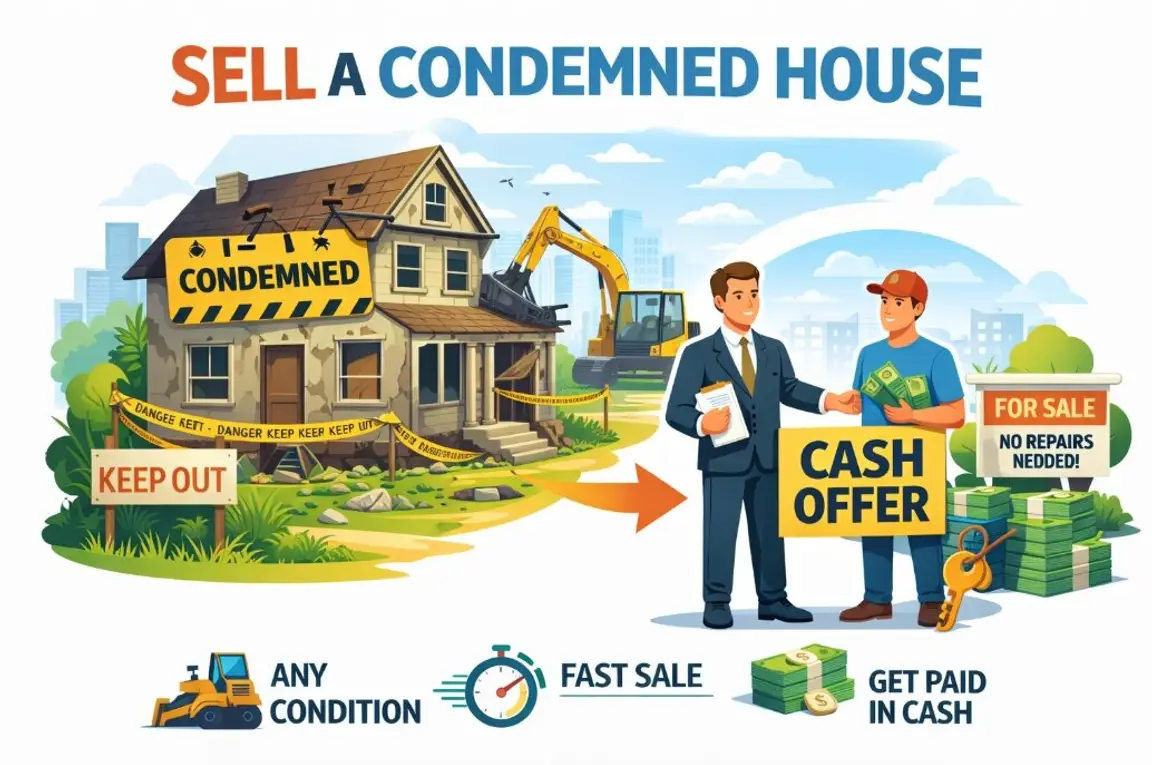
Selling a condemned property in Edison is not something most homeowners ever plan for. It usually comes as a surprise or builds up over time—maybe due to long-term neglect, financial stress, inheritance, or unexpected damage. Whatever the situation, once a property is labeled “condemned,” it can feel like you’re suddenly dealing with a problem that has more questions than answers.
But here’s the good news. You can sell it, and you don’t necessarily need to fix everything before doing so. Still, there are some important steps you should take before putting it on the market or reaching out to buyers. These steps can save you time, reduce stress, and even help you get a better outcome.
Let’s go through them in a practical, straightforward way.
Understand Why the Property Was Condemned
Before anything else, you need clarity on why the property was condemned in the first place. This is often where homeowners in Edison feel overwhelmed, but it’s actually the most important starting point.
A house can be condemned for several reasons. It might be structural damage, severe safety hazards, long-term neglect, fire damage, or serious code violations that were never addressed. Sometimes it’s a combination of issues rather than just one.
When you understand the exact reason, you’re in a much stronger position. You’ll know what buyers are dealing with, what disclosures are required, and what kind of offers you can realistically expect. Without this clarity, the selling process becomes guesswork.
Gather All Property and City Documentation
Once you understand the reason for condemnation, the next step is getting your paperwork in order. This might not feel exciting, but it makes a huge difference later on.
In Edison, condemned properties usually come with official notices, inspection reports, or violation records from the city. These documents explain what needs to be fixed or why the property was flagged in the first place.
Along with that, you’ll also want to collect ownership documents, tax records, and any past repair history you might have. Even if the house is in poor condition, having clear documentation helps establish transparency and builds trust with potential buyers.
Buyers don’t just look at the property—they look at the story behind it. And the more organized that story is, the smoother the conversation becomes.
Get a Realistic Idea of the Property’s Current Value
This is where many sellers struggle emotionally. It’s easy to remember what the house used to be worth or what it could be worth after repairs. But when a property is condemned, the current value is based on its condition today, not its past or future potential.
In Edison, the value often depends on factors like land location, redevelopment potential, and repair costs. In some cases, the structure itself adds little value compared to the land it sits on.
This is why getting a professional opinion or a direct cash offer can be helpful. Companies like Sell My House Fast Offer often evaluate the property as-is, which gives you a realistic benchmark without requiring repairs or upgrades.
Understanding value upfront helps you avoid unrealistic expectations and speeds up decision-making later.
Decide Whether You Want to Repair or Sell As-Is
Before listing or contacting buyers, you should honestly ask yourself whether repairing the property makes sense. Some homeowners consider fixing the issues before selling, thinking it will increase the price.
In reality, condemned properties often require extensive repairs—structural work, electrical updates, plumbing fixes, and city inspections. In Edison, these costs can quickly add up and extend timelines significantly.
If you have the time, money, and patience, repairs might increase value. But for many people, selling as-is becomes the more practical choice. It removes uncertainty and allows you to move forward without additional financial burden.
This decision shapes your entire selling strategy, so it’s worth thinking through carefully.
Understand Your Legal Disclosure Responsibilities
One of the most important steps before selling a condemned property is understanding what you are legally required to disclose.
In Edison, sellers must inform buyers about known issues affecting the property. This includes the condemned status, structural problems, safety hazards, and any city violations or orders.
This isn’t optional—it’s a legal requirement. And while it might feel uncomfortable to list out all the problems, it actually protects you in the long run.
Being upfront reduces the risk of disputes after the sale and helps attract serious buyers who are prepared to handle the condition of the property. Transparency creates smoother transactions, even when the property itself is far from perfect.
Identify the Right Type of Buyer Early
Not every buyer is going to be interested in a condemned home, and that’s completely normal. Traditional buyers usually rely on mortgage financing, and lenders are unlikely to approve loans for unsafe properties.
That means your real audience is usually investors, developers, or direct home buying companies. These buyers are experienced with distressed properties and understand the risks involved.
In Edison, many homeowners choose to work with cash buyers because they simplify the process. There are fewer delays, fewer conditions, and often faster closings.
A direct buyer like Sell My House Fast Offer typically focuses on the potential of the property rather than its condition, which can make the entire process feel less stressful.
Prepare Yourself for a Different Kind of Selling Process
Selling a condemned property is not the same as selling a regular home. That’s something you should mentally prepare for early on.
There may be fewer showings, different types of negotiations, and more focus on repair estimates than aesthetics. Instead of multiple family buyers competing, you may be dealing with a smaller group of serious investors.
This isn’t a disadvantage—it’s just a different market. Once you understand that shift, the process becomes easier to navigate.
The key is staying flexible and open to offers that reflect the condition and reality of the property.
Keep Expectations Grounded but Flexible
One of the hardest parts of selling a condemned property is managing expectations. It’s natural to hope for a strong offer, especially if the home has sentimental or financial value attached to it.
But the market for distressed properties works differently. Buyers factor in repair costs, risk, and time before making an offer.
That doesn’t mean you won’t get a fair deal—it just means “fair” is based on current condition, not ideal condition.
Once expectations are aligned with reality, the process becomes far less frustrating and much more efficient.
Final Thoughts
Before selling a condemned property in Edison, the most important thing you can do is prepare yourself—mentally, legally, and practically. Understanding the condition, organizing documents, knowing your value, and choosing the right type of buyer all play a major role in how smoothly the process goes.
You don’t necessarily need to fix everything or invest heavily into repairs. In many cases, selling as-is is the most practical path forward.
And if you’re looking for a straightforward way to move on without unnecessary delays, reaching out to a company like Sell My House Fast Offer can help you explore your options and understand what your property is really worth in today’s market.
At the end of the day, it’s not just about selling a condemned house—it’s about finding a way forward that actually fits your situation and gives you peace of mind.